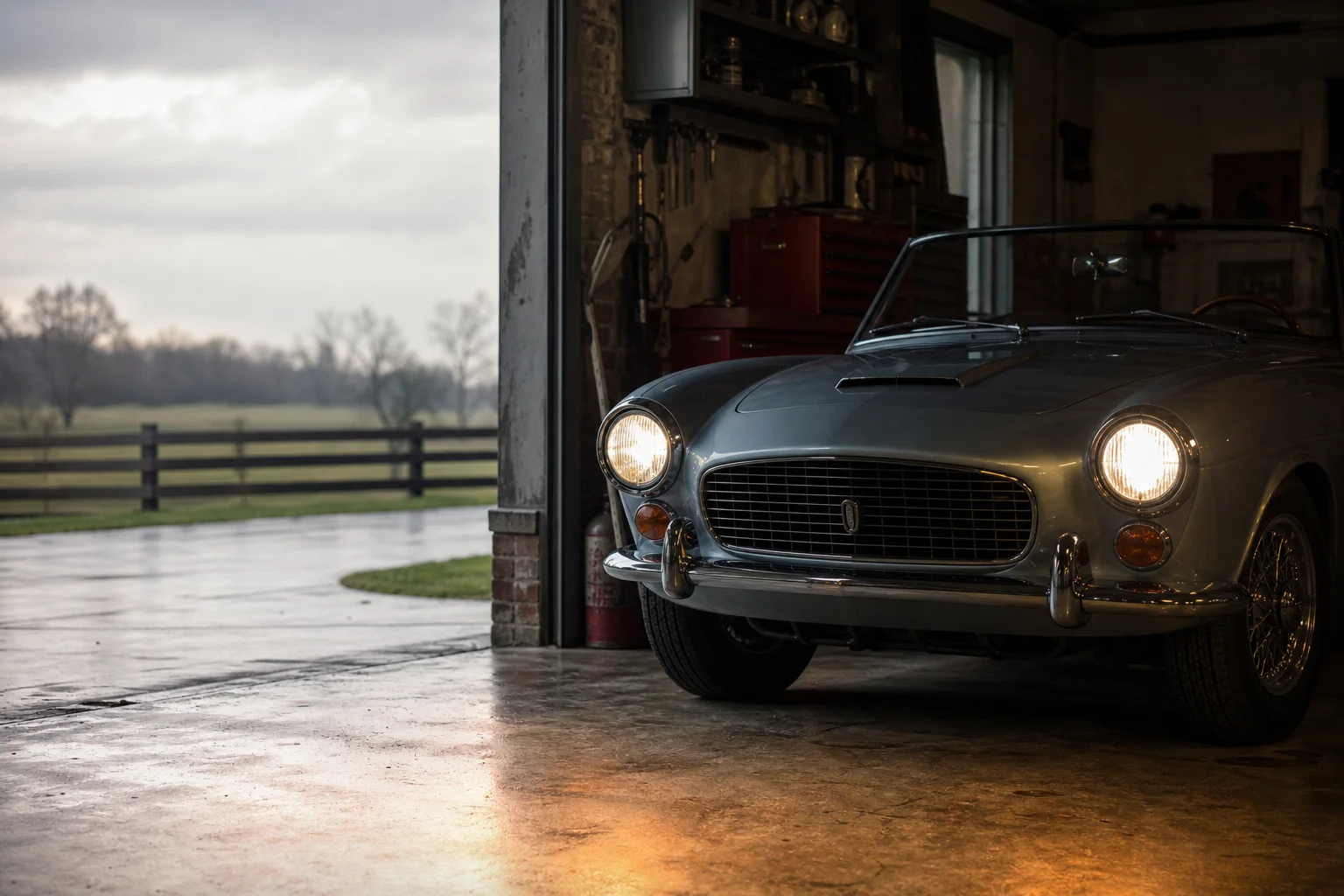
LED lighting can make a classic car safer, but only when it’s treated as a system: optics, wiring, color, flash control, and fitment. Here’s where LEDs deliver real safety gains, where they can create glare and legal headaches, and why a curated, classic-specific supplier like CustomCarLight.com simplifies the work.
The lighting on a vintage car is a time capsule. Sealed beams that were state-of-the-art when interstates were new, incandescent stop lamps sized for two-lane traffic, and instrument bulbs chosen more for cost than clarity. Drive that same car in modern traffic and the weaknesses show up fast: you can’t see as far, and you can’t assume anyone can see you.
LED upgrades promise an easy fix, but the safety story isn’t “LED good, old bulbs bad.” The outcome depends on where you use LEDs, how the lamp was originally engineered, and whether you treat the conversion as a system rather than a handful of bright parts. Done right, LED lighting is one of the cleanest safety upgrades available for a driver-quality classic. Done wrong, it can create glare, strange flash behavior, and light that looks intense up close but disappears at the angles where it matters.
Our restoration shop sees the same pattern on cars that arrive half-upgraded: a mix of bargain LEDs in original housings, a tired charging system, crusty sockets, and a thermal flasher that’s confused by the low current draw. The owner’s intent is sensible. The execution is what needs discipline.
CustomCarLight.com exists for exactly that: classic-car lighting as a matched package, including the parts people forget until the car is on the road after dark. The site is built around the idea that the bulb is only one piece of the outcome, with sequential systems, dash and interior kits, electronic flashers and modules, and vehicle-based fitment tools intended to keep the project coherent from the start.[1]
One principle, three very different lighting jobs
Classic cars ask their lighting to do three separate jobs.
First is seeing: headlamps and any forward lighting that helps you place the car at speed.
Second is being seen: stop lamps, tail lamps, turn signals, side markers.
Third is operating: the dash and interior lighting that lets you read instruments and switches without guessing.
LEDs can improve all three, but the risk profile is different.
For being seen and operating, LEDs are usually a straightforward improvement when matched to the socket and the optic. They draw less current, generally live longer than incandescent bulbs, and reach full intensity quickly. NHTSA’s own research on LED stop lamps notes the fundamental difference in rise time between LED and incandescent sources, and that quicker rise time has been a major point of interest in rear-impact crash analyses.[2]
For seeing, it gets complicated. Headlamps are not just “bright.” They are beam-shaping devices, and a bulb swap that ignores the original optical design can create scatter and glare. Even mainstream enthusiast media that likes LED upgrades still flags aiming, compatibility, and the reality that plug-in LEDs in housings designed around filament placement often don’t deliver a correct pattern.[3]
Why some LED swaps look bright but perform worse
When an incandescent filament sits in a reflector, it acts like a precise point source. The reflector and lens were designed around that geometry. Drop an LED replacement “bulb” into that same system and you often change the size, location, and shape of the emitting surface. The result can be light that’s very bright straight ahead, but uncontrolled above the cutoff and weak downrange where you need it.
That isn’t merely aesthetic. Glare is a safety defect because it robs oncoming drivers of contrast and comfort. It is also an enforcement problem in some states, because headlamp requirements in the U.S. live at the intersection of federal equipment standards and state “in-use” rules.
NHTSA’s interpretation letters make two points that matter to restorers. One: original and replacement lamps sold as equipment are expected to meet FMVSS 108 requirements, and NHTSA has repeatedly addressed how replacement headlamps and light sources fit within that framework.[4] Two: the agency does not “approve” aftermarket products outside enforcement proceedings, so the burden shifts to the manufacturer’s certification and the installer’s judgment.[5]
This is why the safest headlamp path on a classic is usually one of two approaches.
Approach A: Improve the existing incandescent or halogen system as a system. That means clean grounds, restored reflectors, correct lenses, and relays so the switch is not carrying full headlamp load. You keep the original optic and make sure it’s receiving full voltage.
Approach B: Replace the entire headlamp unit with an LED headlamp engineered as a complete assembly. The optic is designed around the LED emitter from the start, which is the only reliable way to ensure beam control.
Approach B can be done tastefully, but on some cars the visual signature is a deal-breaker. In those cases, we lean on Approach A for headlamps and save LED conversions for the rest of the car, where the benefits are large and the downside risk is lower.
The best LED value on a classic: rear lighting
If there is one lighting upgrade that delivers the greatest safety return for the least intrusion, it is the back of the car.
A classic’s tail lamps tend to be small, low, and dim by modern standards. Add today’s distracted drivers and tall grilles, and a vintage stop lamp becomes easy to miss. LED conversions can give you higher effective brightness and crisper on-off behavior, which matters in real traffic. NHTSA’s work on LED stop lamps and real-world crash data exists because that faster and more immediate signaling has been treated as meaningful, not cosmetic.[2]
But rear lighting is also where “brighter” can go wrong. Old lenses and reflectors were designed for a bulb that throws light in many directions. Some LED bulbs are highly directional; they can create a bright hotspot that looks impressive from one angle and oddly weak from another.
This is where purpose-designed kits and panels earn their keep. CustomCarLight.com’s catalog is organized around complete solutions, including sequential kits, 1157-format LED lamps, and the control pieces needed to make them behave correctly on classic wiring.[1]
A good example of a system-minded approach is pairing brighter lamps with the right flasher and signal logic. The company sells an electronic “click” flasher bundled with LED turn-lamp kits, specifically to solve the common mismatch between LEDs and thermal flashers, and to coordinate front and rear signaling behavior when the rear is sequential.[6]
Sequential turn signals: style with a practical edge
Sequential turn signals are often discussed as styling, and on the right car they absolutely are. But there is a safety argument for them, too: they increase conspicuity and can make intent clearer in peripheral vision.
The key is restraint and correctness. A sequential system should still communicate “turn” instantly, in the right color, without ambiguous patterns or extra lamps that resemble emergency lighting.
Color is not a matter of taste. Industry standards specify signal colors, and U.S. regulations commonly reference SAE color requirements for red, amber, and white.[7] If a car originally signaled through a red lens, keep it correctly red. If it was amber, keep it amber. LED conversions tempt owners into “close enough” shades that photograph well and read poorly in traffic.
Dash lighting: preservation disguised as an upgrade
Instrument lighting is where LEDs can make a classic feel younger without making it look modified.
Old gauge clusters suffer from dim, uneven illumination, heat damage to plastic light pipes, and brittle sockets. LEDs run cooler and draw less current, which is good for fragile housings and 50-year-old printed circuits. They also allow you to choose a warmer, period-friendly color rather than the icy blue-white that screams late model.
CustomCarLight.com sells dash lamp kits and publishes installation PDFs, which matters because dash lighting is where owners tend to create new problems: twisted bulb holders, poor grounds, and random polarity issues. Having a known parts list and a known wiring path protects originality and saves time.[8]
The practical shop reality: most lighting problems are wiring problems
Before any LED conversion goes in, the car’s electrical fundamentals have to be honest.
Grounds: Classic lamps often ground through their housings. Paint, corrosion, bodywork seam sealer, and fresh powdercoat can all turn a solid ground into a resistor.
Sockets: Incandescent bulbs can tolerate a lot of marginal contact. LEDs are less forgiving. A weak socket contact can create flicker, intermittent operation, or a lamp that only works when you slam the trunk.
Voltage: Low charging voltage and voltage drop through old switches reduces light output and can confuse modules.
Flashers: Thermal flashers depend on current draw. LEDs don’t draw enough current to heat the element, which creates hyperflash or no flash.
A conversion that doesn’t address these items often “works” in the garage, then fails on the road. That’s why complete kits and the correct modules matter as much as the LEDs themselves. CustomCarLight.com explicitly treats flashers and control modules as core categories, not afterthoughts.[1]
Fitment discipline is part of safety
One quiet advantage of buying classic-specific lighting parts is avoiding the improvisation that ruins otherwise good work.
Wrong base type “made to fit” with bent contacts.
Incorrect polarity in older sockets.
LEDs that interfere with lens depth.
Rear housings that no longer seat because an LED heat sink is too long.
CustomCarLight.com leans into a fitment-first process with a vehicle-based kit builder that is intended to match bulb or socket type, quantity, and the correct SKUs when available, rather than leaving the owner to guess based on a generic bulb list.[9]
A note on legality, without pretending it’s simple
Lighting law in the U.S. is not one clean rule. FMVSS 108 governs new vehicles and replacement equipment sold into commerce; states handle operation and inspection. NHTSA also emphasizes that it does not “approve” equipment in advance, and compliance questions are generally decided through certification and enforcement, not pre-clearance.[5]
In practical restoration terms, the cleanest path is to use lighting components that are designed as lighting components, not novelty accessories; maintain correct colors; avoid extra forward-facing decorative lighting that could be confused for required lamps; and ensure headlamps are properly aimed.
Where owners get into trouble is trying to create modern headlamp performance by dropping LED bulbs into housings that were never designed for them, then compensating with more intensity. That’s how classics become part of the modern headlight glare problem rather than an exception to it.
How we’d stage a safety-minded LED upgrade
A thoughtful LED upgrade on a driver-quality classic generally follows a sequence.
1) Repair fundamentals first: grounds, sockets, connectors, charging voltage, lens condition.
2) Convert rear lamps and turn signals with the correct flasher/module strategy so the car signals cleanly and predictably.
3) Upgrade dash and interior lighting for clarity and reduced heat load.
4) Treat headlamps as their own project: either keep the original optic and improve voltage delivery and aiming, or move to a complete engineered LED headlamp unit rather than a bulb-only swap.
CustomCarLight.com is strongest in steps 2 and 3: the place where LEDs deliver the most benefit with the least conflict, and where the “system” approach of lamps plus flashers, modules, and documented installation does the most to keep a classic behaving like a well-sorted car instead of a science fair.[1]
LEDs are not a shortcut; they are a tool. Used with respect for optics, wiring, and signaling standards, they make a vintage car easier to drive after dark without erasing what it is.
Sources
- Classic Car LED Lighting & Sequential Tail Lights | MP — CustomCarLight.com (MP Custom Car LED Lighting)
- Evaluation of the effectiveness of stop lamps using light emitting diodes (LEDs) (DOT HS 811 712) — National Highway Traffic Safety Administration (NHTSA)
- How to run LED headlights and taillights on your classic — Classic Motorsports
- Shih.3 | NHTSA Interpretation — NHTSA
- LEDlamp.1 | NHTSA Interpretation — NHTSA
- MP-1157-UB-DBL 1960-1973 Double Rate Front Turn Lamps Kit — CustomCarLight.com (MP Custom Car LED Lighting)
- SAE J578 Color Specification for Electric Lamps — SAE International
- Classic Car LED Installation Manuals | CustomCarLight — CustomCarLight.com (MP Custom Car LED Lighting)
- Classic Car LED Bulb & Lighting Kit Builder | CustomCarLight — CustomCarLight.com (MP Custom Car LED Lighting)
AI-assisted research, reviewed and approved by Exclusively Classics.