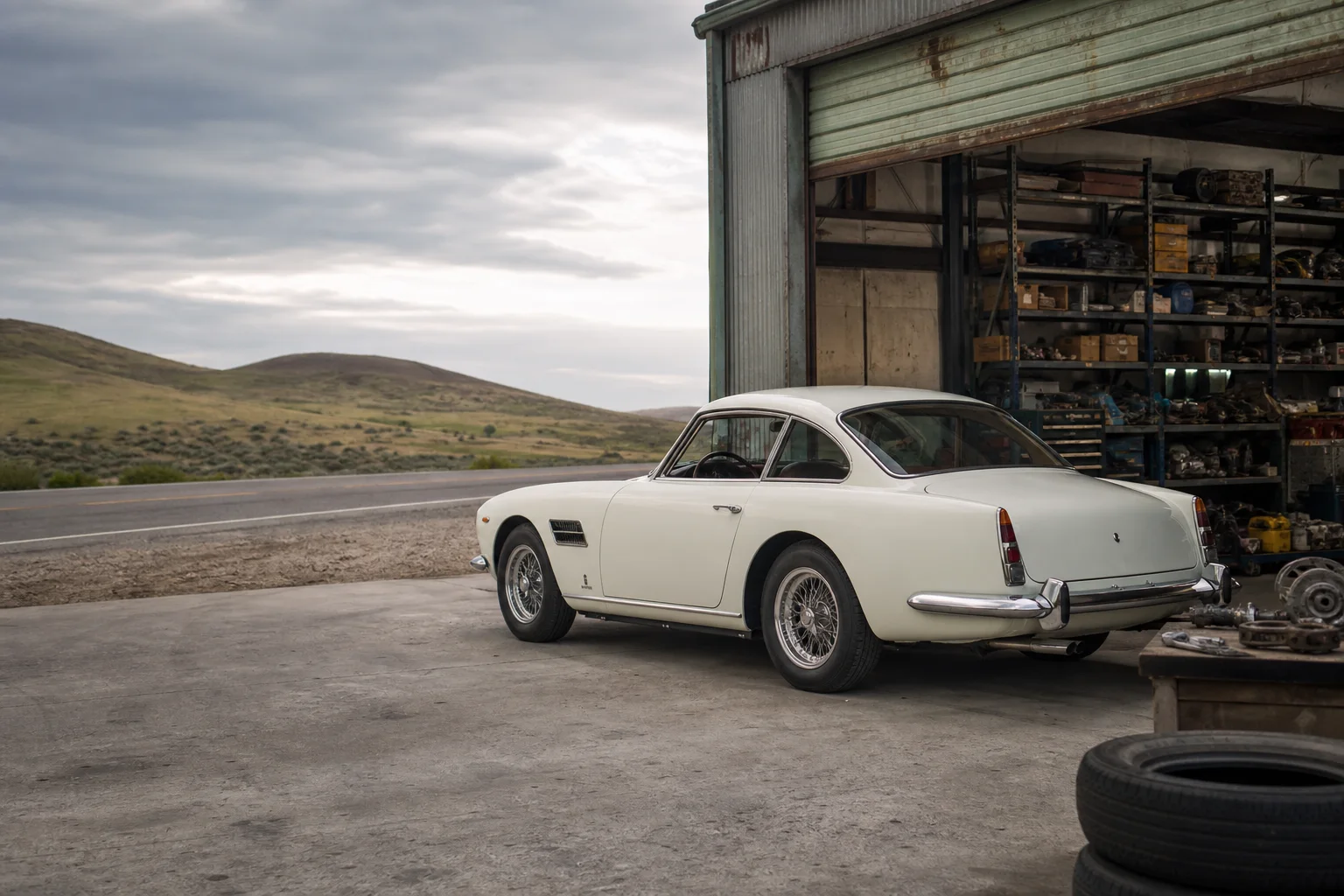
Parts availability is the difference between a restoration you can plan and one you have to invent. Here are the classic platforms that still have a real supply chain—and what that changes for buyers and restorers.
In restoration, “parts availability” is not a yes-or-no question. It is a spectrum that runs from trim clips you can still buy new, all the way to the rare platforms where you can order an entire bodyshell or even a complete replacement body. The difference matters more than most buyers expect, because it decides whether a project is a careful assembly job or an improvisation exercise.
The most defensible way to shop for a classic with easy parts support is to follow the licensing and tooling. When a manufacturer (or a factory-authorized supplier) supports reproduction parts with drawings, trademarks, and quality control, you typically get better fit, better consistency, and a clearer paper trail than you do with anonymous aftermarket parts. That support also changes how a shop quotes work: more predictable parts flow means fewer stalled jobs, fewer “make it work” hours, and less risk that a car becomes dependent on one hard-to-replace piece.
Two modern programs show why this matters. General Motors runs a trademark licensing program that explicitly includes restoration parts, with licensees required to meet GM’s criteria to use the marks. [1] In practice, this is the difference between “a part that exists” and “a part that exists with an official framework behind it.” GM also publishes GM Restoration licensed-manufacturer lists and describes the program as a route to more authentic, better-fitting restoration parts, including the headline-grabbing fact that some first-generation Camaro items are available all the way up to an entire body shell. [2]
On the European side, Volkswagen operates Volkswagen Classic Parts as a dedicated spare-parts line for older models, stating that the program has been in place for more than twenty years and is meant to keep older Volkswagens serviceable, from early cars through later “modern classics.” [3] The key takeaway is not that every part is in stock today, but that there is an institutional reason parts keep being reissued, cataloged, and warehoused.
From a restoration-shop perspective, three families rise to the top if the mission is straightforward ownership and predictable rebuilds: 1960s Mustangs, 1967–69 Camaros (and related GM F-body), and the air-cooled Volkswagen Beetle. After that, certain British classics—especially MGBs and MG Midgets—slot in as the “smart import” choice, because the supply chain includes factory-tooling bodyshells and deep catalog support.
The short list: what to buy when parts support matters most
1) 1964½–1973 Ford Mustang: the catalog car, for good reason
If a single U.S. classic is synonymous with reproduction support, it is the early Mustang. The car’s popularity is part of the story, but so is its underlying architecture: the Mustang was designed around existing Ford components, which historically simplified service and parts stocking. [4] That “common parts” DNA remains a quiet advantage today when you are chasing down driveline hardware, suspension consumables, and underhood basics.
For an owner, the practical win is choice. There is a difference between “you can buy a part” and “you can buy that part in three grades.” In the Mustang world, you often can: driver-quality, mid-grade, and concours-focused. In the shop, this lets a build be honest about its intent. A preservation-minded car can keep original pieces where it counts and replace only wear items; a restomod can take advantage of readily available upgraded components without turning the project into a custom-fabrication exercise.
There is also the boring-but-critical reality of documentation. Factory-style parts catalogs and diagrams are widely reproduced and traded, which reduces mis-orders and speeds up decision-making during teardown and reassembly. [5] That matters because the biggest cost in many restorations is not the part itself; it is the time burned when the wrong part arrives, or when a tech has to stop and reverse-engineer what a previous owner changed.
Restoration implications: early Mustangs are still old cars, and reproduction doesn’t automatically equal correct. The deeper the catalog, the more variation you will find in fit and finish. The practical approach is to treat reproduction parts as a menu, not a guarantee: keep your original parts until the replacement is test-fit, and budget time for refinishing even “new” trim pieces.
2) 1967–1969 Chevrolet Camaro (and 1967–69 Firebird): when “rust repair” can mean “new structure”
First-generation Camaros sit at the intersection of huge enthusiast demand and unusually comprehensive sheetmetal reproduction. GM’s licensing program explicitly frames restoration parts as part of its licensing umbrella, and GM’s GM Restoration Parts materials describe licensed offerings that range from small items to major structures, including complete Camaro bodies. [1] [2]
That is not theoretical. Dynacorn’s body program literature describes complete replacement body shells for 1967–69 Camaros, and it does so as a GM-licensed application of GM trademarks. [6] Ames Performance similarly markets Dynacorn “complete” 1967–69 Firebird unibody assemblies as a way to replace severely rusted cars or build from the ground up. [7]
When a bodyshell is on the table, the entire risk profile of a project changes. In the real world, a “cheap” rusted Camaro can consume hundreds of hours in metal work before it is safe, square, and straight—especially around structural points. Access to large-scale replacement structures means a shop can make a more rational decision: repair original metal where it makes sense, replace assemblies where the time-versus-originality trade is favorable, and keep the project moving.
There are cautions. Even within robust reproduction ecosystems, parts go in and out of availability, and vendors will list items as unavailable or discontinued. [8] That matters when a build depends on a specific assembly rather than a patch panel. It also reinforces a best practice: if a restoration hinges on a known hard-to-get component (a specific dash bezel, trim package, or interior item), confirm it is actually available now—not just shown in a catalog—before you commit to the car.
Restoration implications: on GM F-body builds, “easy parts” often translates into “easy sheetmetal,” not “easy authenticity.” The market supports everything from driver-grade panels to high-dollar, correctness-focused components. A car intended to present as factory-correct should be planned around licensed parts where possible and around careful fit checks everywhere, because panel alignment is where labor hours quietly stack up.
3) Air-cooled Volkswagen Beetle: institutional support plus a massive independent supply chain
The Beetle’s parts story is different. It is not just an American aftermarket phenomenon; it is a global platform that stayed in production in various forms long after it disappeared from many markets. Volkswagen’s own Classic Parts program positions itself as a long-running effort—more than twenty years—to keep older cars supported with “original” Classic Parts for models spanning decades. [3] That factory-backed channel exists alongside a vast independent ecosystem, particularly for wear items, mechanical parts, seals, and trim.
For owners and shops, the Beetle’s advantage is breadth. Many projects can be treated as straightforward mechanical reconditioning and rust management rather than parts archeology. That makes Beetles unusually suitable for “use the car” restoration: rebuild the systems that make it safe and reliable, preserve original finishes where possible, and replace what must be replaced without spending months waiting for one unique component.
Restoration implications: the Beetle’s downside is that easy availability can tempt poor choices. Not all reproduction parts are equal, and some inexpensive components can create repeat labor. The most time-effective strategy is to restore original German parts when they are salvageable (switchgear, certain trim, hardware) and reserve reproduction for consumables and areas where the aftermarket has proven consistency.
4) MGB and MG Midget: the smart classic when you want “real classic” with real supply
For buyers who want an approachable European classic with deep parts support, the MGB family remains a strong choice because the supply chain includes large structural components and a modern retail infrastructure.
British Motor Heritage (BMH) is explicit about producing bodyshells and body panels for classic British cars, with product identified by BMH’s approved labeling as an assurance of originality and quality. [9] MGOC Spares, for example, describes MG Midget bodyshells as manufactured by BMH using almost 100% original factory press tooling and assembly jigs—language that speaks directly to fit and dimensional integrity. [10]
On the parts distribution side, Moss Motors publishes an MGB/MGC restoration parts catalog that aims for comprehensive coverage and states that it is an authorized manufacturer and distributor of British sports car spares under a licensing agreement with BMH. [11] Moss also notes an important reality that applies to every marquee: some items may not be currently available, and the most reliable indication is live availability through the seller rather than the static catalog page. [11]
Restoration implications: British sports cars often have simpler mechanical systems than their reputation suggests, but corrosion and previous repairs drive the true cost. The existence of BMH shells and panels changes how a shop can approach a structurally compromised MG. Instead of endless patching, you can plan a more decisive structural solution—particularly when safety-critical rust is present.
What “easy parts” actually buys you
Parts availability is not just convenience. It changes the kind of restoration that makes sense.
First, it makes preservation viable. When consumables are easy to source, you do not have to replace everything “just in case.” You can preserve original finishes and pieces, confident that wear items can be replaced later without drama.
Second, it makes estimates honest. Programs like GM’s licensing structure and the existence of full structural assemblies in the market provide a basis for predictable ordering and fewer fabrication surprises. [1] [2] [6]
Third, it helps a car stay on the road. A classic that depends on one unobtainable component becomes a garage ornament. A classic with a deep supply chain can be maintained like a machine.
The cautions: reproduction parts can still bite
Even in the best-supported ecosystems, reproduction parts are not a blank check.
One, “available” can mean “available somewhere,” not “available this week.” Vendor listings routinely show items as unavailable or discontinued. [8] Any serious build plan should include a parts-availability check at the start, before teardown turns a running car into a pile of subassemblies.
Two, not every new part is the right part. Licensed programs are a positive signal, but they do not erase the need for test fits and realistic labor planning. And even high-quality new panels can require alignment work, because the surrounding car—often repaired multiple times over decades—may not be dimensionally perfect.
Three, a replacement bodyshell raises legal and identity considerations. In some jurisdictions, replacing a monocoque bodyshell or chassis triggers additional paperwork. The UK’s DVLA, for instance, has a specific vehicle parts statement form used when notifying authorities about reconstructed vehicles and like-for-like replacement chassis or monocoque bodyshells. [12] The U.S. framework varies by state, but the underlying lesson travels: major-structure swaps need to be planned with documentation in mind.
A defensible buying rule
If the goal is a classic that can be restored without heroics and maintained without scavenger hunts, buy into a platform with both breadth and structure in its parts supply: early Mustangs, first-generation Camaros/Firebirds, air-cooled Beetles, and the MGB/Midget family. Each has deep catalog support, established reproduction channels, and—crucially—real options when rust or structural damage would otherwise end the conversation. [2] [6] [9] [11]
Parts support does not guarantee an easy restoration, but it does guarantee something more valuable: the project stays solvable.
Sources
- Licensing | General Motors — General Motors
- GM Restoration Parts Licensed Manufacturer List (PDF) — Chevrolet / General Motors
- About us | Volkswagen Classic Parts — Volkswagen Classic Parts (Volkswagen Group)
- Ford Mustang — Wikipedia
- Ford Mustang Parts Catalog and Ford Car Master Parts Catalogs — MustangServiceManual.com
- Dynacorn Classic Bodies information sheet (PDF) — Dynacorn (document host: Gruppe Network)
- 1967–69 Firebird Unibody Shells (Ames catalog PDF) — Ames Performance Engineering
- Camaro Dynacorn Classic Bodies listings — Camaro Central
- Body Shells - British Motor Heritage Limited — British Motor Heritage Limited
- MG Midget Body Shells | MGOC Spares — MGOC Spares
- MGB/MGC Restoration Parts Catalog (PDF) — Moss Motors
- Vehicle parts statement (V627/1) - GOV.UK — UK Government (DVLA)
AI-assisted research, reviewed and approved by Exclusively Classics.